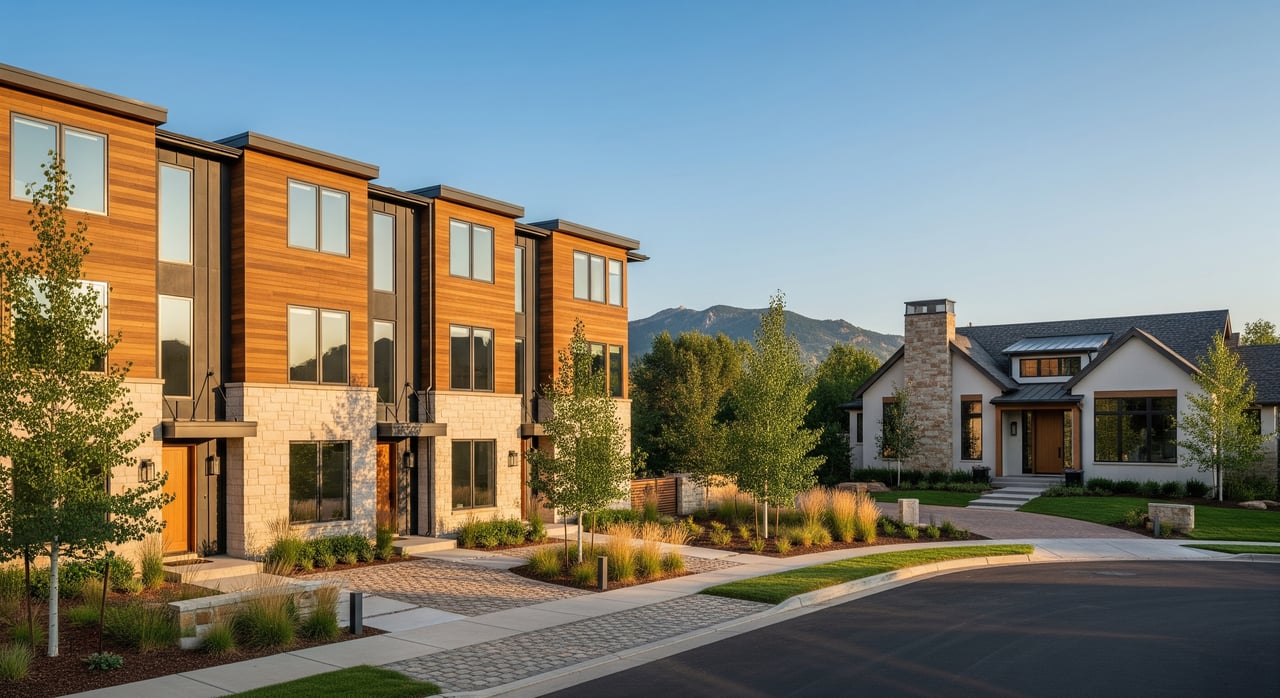
Trying to decide between a townhome or a single-family home in Lone Tree? You’re not alone. Between work in Denver Tech Center, weekends at Park Meadows, and a busy calendar, the right choice comes down to how you live, what you want to maintain, and what you want to spend each month. In this guide, you’ll compare costs, lifestyle tradeoffs, transit access, and resale factors, plus get a quick checklist to make a confident choice. Let’s dive in.
Lone Tree at a glance
Set in Douglas County, Lone Tree blends newer master-planned neighborhoods with retail, dining, and medical hubs. You have quick access to I-25 and C-470, RTD light rail, Park Meadows, and nearby employment centers like Sky Ridge Medical Center. This mix draws professionals, downsizers who want lower maintenance, and families who value neighborhood amenities.
These demand drivers matter for both townhomes and single-family homes. Proximity to shopping and transit often helps resale for attached homes, while single-family properties typically attract a wider buyer pool seeking yards and space. Your best fit comes down to daily priorities.
Cost comparison: what to budget
Your monthly cost is more than a mortgage. Plan for taxes, insurance, HOA dues, utilities, and maintenance. Comparing apples to apples is the key.
Purchase price and taxes
Single-family homes often list higher than townhomes on a per-home basis, though price per square foot can vary by neighborhood and age. To compare real values, look at recent sales in Lone Tree using local MLS data and neighborhood-specific comps.
Property taxes are based on assessed value and local mill levies. You can review a property’s tax history and assessments through the Douglas County Assessor to understand true annual costs.
HOA dues and what they cover
Townhome communities usually include HOA dues that may cover exterior maintenance, roof reserves, snow removal for common areas, landscaping, trash and recycling, and shared amenities like a pool or clubhouse. Some single-family neighborhoods also have HOAs that manage common areas, though the coverage is often lighter.
When you evaluate a property with an HOA, request and review:
- CC&Rs and bylaws
- Budget, reserve study, and insurance policies
- Meeting minutes from the last 12–36 months
- Special assessment history and any upcoming projects
- Rules on rentals, pets, parking, and exterior changes
Under Colorado’s Common Interest Ownership Act (CCIOA), sellers are required to make HOA documents available. Read them before you commit.
Insurance and utilities
- Townhomes: Your policy often covers interiors and personal property. The HOA policy typically covers common areas and sometimes the exterior shell. Confirm coverage to avoid gaps.
- Single-family: You insure the entire structure and lot. Expect to cover all utilities, including water for irrigation.
Attached homes may have lower total utility use, but billing and meter setups vary. Ask for recent utility bills on any property you’re serious about.
Maintenance and long-term repairs
- Single-family: You’re responsible for the roof, siding, driveway, fencing, trees, and most exterior systems. Costs can be uneven year to year.
- Townhome: Exterior items often fall to the HOA, which reduces your time commitment but shifts costs into dues and potential special assessments.
For any older home, ask about the age and condition of the roof, HVAC, water heater, and sewer line, and get a thorough inspection.
Parking and fees
Compare garage size, driveway capacity, guest parking, and any restrictions. Some HOAs limit overnight street parking or the number of vehicles. Make sure the setup fits your lifestyle.
Do the math: total monthly housing cost
For each property, estimate: mortgage + property taxes/12 + insurance/12 + HOA dues (if any) + average utilities + a maintenance reserve. This single monthly number gives you a clear side-by-side view across property types.
Lifestyle and privacy: what fits your day-to-day
Privacy and noise
Single-family homes offer more separation and private outdoor space, which can feel quieter. Townhomes share walls, floors, or ceilings, so construction quality and sound mitigation matter. Ask about party walls and insulation details.
Yard and outdoor living
If you want a garden, play area, or room for pets, a single-family lot may be ideal. If low maintenance is your goal, many townhome HOAs handle landscaping and snow removal so you can lock and leave.
Time and travel
If you travel often or prefer to spend weekends on the trails instead of yard work, a townhome can free up time. If you enjoy DIY projects and customizing your exterior, a single-family home gives you flexibility, but budget for your time and materials.
Accessibility and single-level options
Some townhomes offer main-level living or elevator access that appeal to downsizers. Newer single-family homes may include main-level suites. Match the floor plan to your long-term needs.
Parking, storage, pets, and rentals
Check garage dimensions, storage solutions, and any HOA rules. If you plan to rent your property in the future or have pets, review restrictions early so there are no surprises.
Age and energy efficiency
Newer construction in Lone Tree often delivers better energy performance and modern layouts. Older homes may need upgrades. If efficiency is a priority, compare window, insulation, and system specs.
Transit, Park Meadows, and resale
Many Lone Tree buyers value access to RTD light rail and major roadways for commutes into Denver, DTC, or Sky Ridge and nearby offices. For each listing, measure the actual walk or drive time to stations and consider safe pedestrian routes. Convenience often boosts demand, especially for attached homes near Park Meadows.
Being close to retail and medical services is a common priority for downsizers and professionals. That proximity can support resale, but weigh any tradeoffs like traffic or noise. For families, school zoning through Douglas County School District is part of the decision, though many buyers will prioritize location and maintenance needs first.
Resale drivers to watch:
- HOA health: Strong reserves and predictable dues support value in attached communities.
- Noise and traffic: Busy roads can limit buyer interest.
- Supply: If many similar townhomes hit the market at once, price competition can rise. Monitor local inventory before you buy.
Quick decision guide
Use these signals to narrow your choice:
- Choose a townhome if you want low-maintenance living, value proximity to transit and shopping, travel often, or prefer amenities over yard work.
- Choose a single-family home if privacy, yard space, and exterior customization are priorities, or you want more storage and parking flexibility.
- Either can work if you want convenient access to Park Meadows and RTD. Focus on the exact location, walkability, and noise profile of each property.
What to check when touring
For any property
- Recent neighborhood comps from the last 30–90 days
- Property tax history and current assessed value
- Full seller disclosures and inspection findings
- Ages of major systems: roof, HVAC, water heater, sewer line
- Commute times and transit access to your key destinations
- City planning or future development nearby
For townhomes
- Exact owner vs HOA maintenance boundaries
- CC&Rs and rules for parking, exterior changes, pets, and rentals
- Budget, reserve study, insurance coverage, and meeting minutes
- Any pending litigation or special assessments
For single-family homes
- Estimates for big-ticket exterior items: roof, driveway, fence
- Irrigation setup and water bills for peak summer months
- Tree health and removal needs
A simple plan to move forward
Define non-negotiables. Yard size, garage capacity, walk time to transit, and proximity to specific amenities or medical services.
Compare the market. Pull current MLS reports for your target neighborhoods in Lone Tree, looking at price trends, inventory, and days on market for both product types.
Tour a mix of options. Visit listings near Park Meadows and RTD stations at different price points. Pay attention to parking, noise, and real walkability.
Review HOA documents early. If a home has an HOA, study the budget, reserves, meeting minutes, and insurance. Ask a qualified professional to review any red flags.
Inspect thoroughly. Order a detailed inspection and get estimates for deferred maintenance, especially on single-family exteriors.
Run the full monthly number. Calculate mortgage + taxes/12 + insurance/12 + HOA + utilities + maintenance reserve for each finalist.
Choosing between a townhome and a single-family home in Lone Tree is about aligning lifestyle, budget, and location. If you want help weighing specific neighborhoods or running a side-by-side cost analysis, the Ford Fountain Team offers concierge-level guidance backed by deep local experience. Let’s make a confident plan that fits your next chapter.
FAQs
What is the best way to compare monthly costs for a Lone Tree townhome vs a single-family home?
- Calculate mortgage + property taxes/12 + insurance/12 + HOA dues (if any) + average utilities + a monthly maintenance reserve to compare options on equal footing.
How do I evaluate the health of a townhome HOA in Lone Tree?
- Review the budget, reserve study, insurance policies, meeting minutes, and special assessment history, and confirm owner vs association maintenance responsibilities.
Does being near RTD light rail or Park Meadows help resale?
- Convenience to transit, shopping, and medical services often supports demand, but confirm noise levels, parking, and walkability because those tradeoffs affect value.
Are single-family homes more private than townhomes in Lone Tree?
- Generally yes, thanks to detached structures and yards, though construction quality and lot placement still determine actual privacy and noise.
What documents should I request before making an offer?
- Recent comps, tax history, full seller disclosures, inspection reports, and, if applicable, HOA CC&Rs, bylaws, budget, reserve study, insurance, meeting minutes, and rules on pets and rentals.