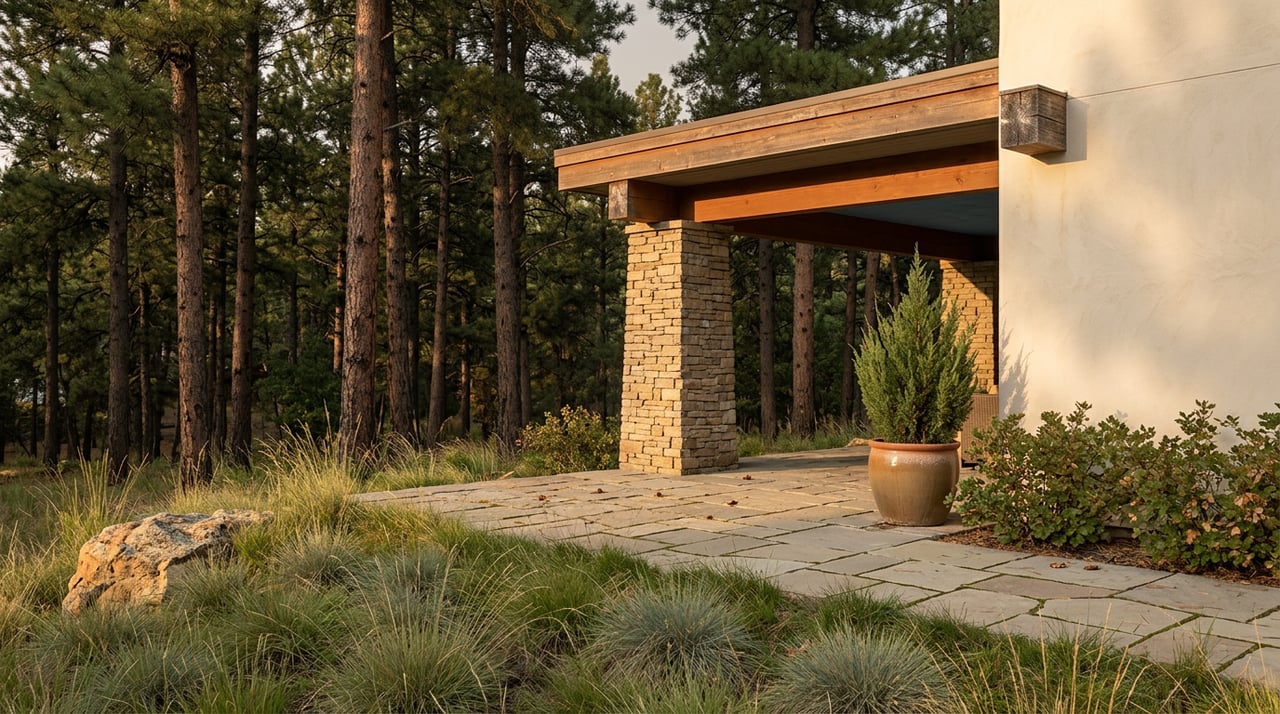
Why does the bugling drifting over Happy Canyon Road most evenings this week sound like it's coming from inside the gates rather than from Cherokee Ranch two miles south? Because in a real sense, it is. The elk putting on the show that half of Douglas County buys tickets to see already consider the Village part of their range. Residents just haven't always connected the two.
That connection matters more this particular fall than most. The same community committees that spent the past year working toward the Village's new Firewise USA Community Certification are managing the exact stretch of forest the herd depends on for cover and forage. One story is about wildfire risk. The other is about wildlife. This year, they're the same story.
The Herd Doesn't Start at the Gate
Cherokee Ranch & Castle sits on more than 3,000 acres of foothills between Sedalia and Highlands Ranch, and its property has functioned as a winter range for a resident elk population for decades. That's the ecological anchor for the region's fall bugling season, and it's the reason the ranch built an entire ticketed program around it.
But the Village's own wildlife pages describe something residents tend to underweight: a resident herd that moves along Happy Canyon Road, inside the community's own boundary. This isn't a rumor passed around at gate check-in. It's on the Village's official wildlife resource page, filed alongside notes about foxes, bobcats, and the occasional black bear. The animals bugling loud enough to hear from a back patio this week aren't visiting from Cherokee Ranch. They're using ground the Village already counts as home range, the same open forest and rock outcroppings that made this land attractive to a golf course developer back in the 1970s are exactly what an elk herd looks for heading into rut.
That reframes the calendar. The "elk experience" most people associate with a Tuesday night drive to Sedalia is, for Village residents, also a phenomenon that shows up on their own street.
What's Actually on the Calendar Through October 1
Cherokee Ranch's 2026 bugling season runs Tuesday through Thursday evenings, September 15 through October 1, when bulls are most active and audible at dusk. One recent evening program, covered by the Denver Gazette for its September 11 to 17 events roundup, ran at 5 p.m. on September 17 with a $44 admission that included access to the grounds during peak calling hours. As the paper put it, guests come to hear the elk "speaking the language of love" while learning about the rut itself. Guests are welcome to bring their own picnic dinner, with beer, wine, and snacks available for purchase on site.
Here's the detail worth knowing before booking anything: this year happens to double as a milestone season at the ranch. The castle at the center of the property was built between 1924 and 1926, which makes 2026 its 100th year. The ranch marked that with a centennial gala back in June, but the anniversary framing has kept the property's profile higher than usual all season, and that's likely part of why the fall bugling nights have been drawing more attention in local coverage this year than in years past.
| Detail | 2026 Specifics |
|---|---|
| Dates | September 15 through October 1 |
| Days | Tuesday, Wednesday, Thursday evenings |
| Sample program | 5 p.m., September 17, $44 admission |
| Food | Guests may bring a picnic; beer, wine, and snacks sold on site |
| Tickets | Through cherokeeranch.org |
Where the Village's Own Elk Actually Show Up
None of this means a resident has to leave the neighborhood to hear it. A few practical notes worth keeping in mind through early October, drawn from the kind of guidance the Village's Wildlife Committee has put out in the past:
- Dusk and dawn are the highest-activity windows for elk movement along the Village's interior roads, particularly near Happy Canyon Road.
- Keep distance. Bulls in rut are territorial and unpredictable, and the same 150-foot-plus buffer wildlife officials recommend everywhere in Colorado applies here too.
- Slow down on entrance and exit roads after dark. A herd crossing doesn't announce itself with headlights.
- If you find an injured animal, the Village's own guidance is blunt: do no harm, get it to a licensed rehabilitator or veterinarian, and don't attempt to keep or handle wildlife without state licensing.
None of this requires a ticket, a drive to Sedalia, or a reservation. It requires paying attention on a walk you were already planning to take.
The Firewise Connection Nobody's Talking About
Here's the part that turns a nice nature note into something closer to a story about how the neighborhood actually runs. The Village at Castle Pines recently earned Firewise USA Community Certification, a milestone the Homes Association credits to the collaborative work of residents, the Castle Pines Homes Association itself, the Forest Stewardship Committee, and the Castle Pines Village Metropolitan District.
Firewise work is fundamentally about thinning understory brush and dead fuel around homes and along the forest edge to reduce wildfire risk. It's also, whether or not that was the primary goal, the kind of forest management that tends to open up exactly the browse-and-cover edge habitat elk favor. Dense, untouched pine stands offer cover but little to eat. Thinned corridors with more sunlight reaching the forest floor grow the grasses and shrubs elk actually forage on, while nearby stands of mature ponderosa still give them a place to bed down and disappear from view.
Nobody on the Forest Stewardship Committee is managing the Village's trees for elk habitat. But it's worth sitting with the fact that the same landscape decisions keeping homes defensible against wildfire are, as a byproduct, shaping how much of this range stays attractive to the herd that's currently making all the noise. A neighborhood earns a fire safety certification and, without anyone planning it that way, quietly influences its own wildlife calendar.
An Evening Plan That Starts and Ends Inside the Gates
For residents who want to make an evening of it without booking a Cherokee Ranch ticket, the setup is already built into the neighborhood. The Village Shops sit at the heart of the community off Happy Canyon Road, and a few stops there turn a dusk elk-watch into an actual plan.
Since Cherokee Ranch's own bugling nights explicitly welcome a picnic dinner, a stop at Tony's Meats & Market for cuts of meat or prepared food to go is a genuinely useful local tip, not just a nice-to-know. For a lower-key night that stays inside the gates entirely, pick up a bottle at Dodd's Wine Vault and grab a pie from Anthony's Pizza & Pasta before heading out toward Happy Canyon Road at dusk to see what the neighborhood's own herd is doing. Either way, nobody needs to leave the community to build a real evening around this.
What This Actually Means for Anyone Who Lives Here
The takeaway isn't that elk season is happening near the Village. It's that the Village is already inside it, and the same civic work keeping the community fire-safe is part of what keeps that experience close enough to hear from a porch. Cherokee Ranch will keep selling out its Tuesday and Thursday programs through October 1, and that's worth doing at least once for the guided context alone. But the version that costs nothing and requires no reservation is already happening along Happy Canyon Road most evenings this month.
That's the kind of detail that only becomes obvious after living here a while, watching the same forest do different things across different seasons, and noticing that the community's quiet infrastructure decisions ripple further than anyone advertises. If this is the kind of place you're already picturing yourself in for the long term, or if you're weighing what a property along that same landscape might be worth, the Ford Fountain Team has spent years working this exact stretch of Douglas County and is glad to talk through what you're seeing, whether that's an elk on your street or a decision about your next move here. Schedule a Private Consultation whenever you're ready for that conversation.